The Real Price of Desire: What American Women Actually Pay for FDA-Approved and Over-the-Counter Sexual Health Treatments
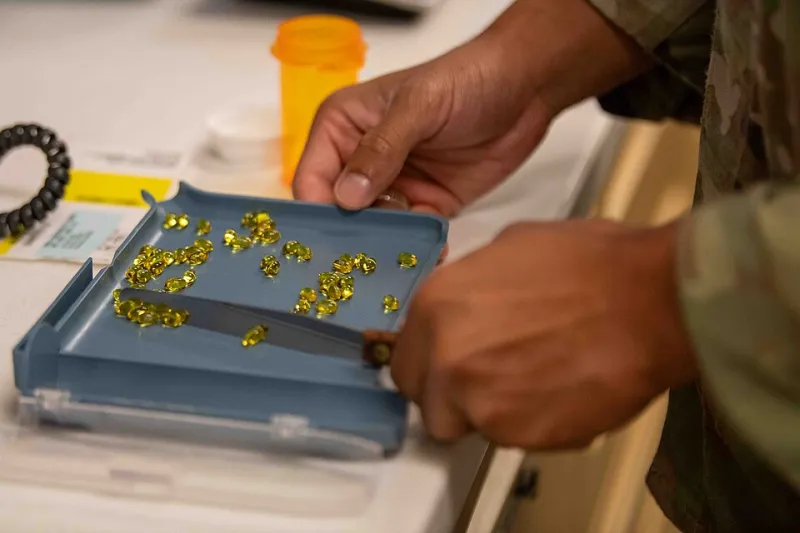
Photo: U.S. Air Force photo by Airman 1st Class Karina Lopez, Public domain, via Wikimedia Commons
Ask what a female sexual health treatment costs and you'll get a shrug even from many clinicians. Prices are opaque, coverage is inconsistent, and two women with identical prescriptions can pay anywhere from $4 to $499 for the same month of therapy. Here is a clear-eyed accounting of the landscape — and what to do when the math doesn't work in your favor.
(Prices below reflect typical US ranges as of recent years; pharmacy pricing shifts constantly, so always verify current costs.)
Prescription Medications
Flibanserin (Addyi). The list price hovers around $400–$500 per month without insurance. However, the manufacturer offers a subscription program (roughly $20–$85 per month depending on the plan) that bypasses traditional insurance entirely — a model born precisely because most insurers declined to cover the drug. With coverage, copays typically range from $0 to $50 on commercial plans.
Bremelanotide (Vyleesi). This as-needed injectable runs approximately $900+ per month at list price. Coverage is spottier than for flibanserin, and manufacturer assistance is less generous. For many patients, this remains the most expensive option on the menu.
Hormone therapies. Localized vaginal estrogen (creams, inserts, rings such as Estrace or Estring) generally costs $30–$150 per month without insurance, and is widely covered because it treats genitourinary symptoms of menopause, a widely recognized diagnosis. Generic estradiol creams and tablets sit at the low end. Systemic hormone therapy for menopause, when appropriate, often runs $20–$80 monthly in generic form.
Ospemifene (Osphena). A daily oral tablet for dyspareunia due to menopause, roughly $250–$300 list. Prior authorization is common.
Over-the-Counter and Device Categories
Lubricants and moisturizers. The workhorses of female sexual health, and the cheapest: $8–$25 for quality, body-safe, osmolality-appropriate lubricants; $15–$30 for long-lasting vaginal moisturizers like Replens. Insurance rarely covers these, though HSA/FSA funds often can be used.
Vaginal dilators. $40–$200 depending on set quality; frequently recommended for vaginismus and post-treatment rehab. Rarely covered, though documented medical necessity sometimes changes that.
FDA-cleared devices. The Eros Clitoral Therapy Device has historically listed around $300–$400; newer over-the-counter arousal and pelvic health devices range widely. Note that many 'wellness' devices marketed on social media are not FDA-cleared at all — a distinction worth verifying before paying premium prices.
How to Change the Math
1. Pharmacy discount programs. GoodRx, SingleCare, and similar services routinely cut generic and even some brand-name prices by 30–80%. They're free and require no insurance — sometimes they beat your copay.
2. Manufacturer programs. Both Addyi and Vyleesi have patient assistance or direct-purchase options. Check the manufacturer's website before paying cash at the counter.
3. Telehealth platforms. Subscription-based women's health platforms often bundle the consultation and medication into a flat monthly fee, which can undercut traditional pricing — but compare total costs, not teaser rates.
4. Generic and therapeutic alternatives. Ask whether a generic estradiol cream, an alternative SSRI-side-effect workaround, or a covered option could achieve the same clinical goal at a fraction of the cost.
When Insurance Says No: An Appeal Playbook
Female sexual dysfunction prescriptions are denied at disproportionately high rates. A denial is a starting point, not a verdict.
Step 1: Get the denial reason in writing. Insurers must explain their rationale — 'not medically necessary,' 'experimental,' 'not on formulary.' Each reason has a different counter.
Step 2. Request a formulary exception or peer-to-peer review. Your prescriber can submit documentation of diagnosis (e.g., HSDD under ICD-10 code F52.31, or GSM under N95.2) and argue that covered alternatives have failed or are contraindicated.
Step 3. Cite the evidence. FDA approval itself refutes 'experimental.' Include prescribing guidelines and any prior authorization criteria the insurer publishes.
Step 4. Escalate internally, then externally. If the internal appeal fails, most states offer an independent external review — often free — where a third-party reviewer can overturn the insurer's decision.
Step 5. Document impact. Letters describing how the condition affects daily functioning, sleep, relationships, and mental health carry weight. Keep copies of everything.
The Bottom Line
The most expensive treatment is the one you can't access. Between discount programs, direct-purchase models, and persistent appeals, the sticker price is rarely the final price — but it takes an informed patient to find out. Cost should be a hurdle you can clear, not a wall that ends the conversation.