Between the Candles and the Checkout Line: What Retail Placement Reveals About How America Values Female Desire
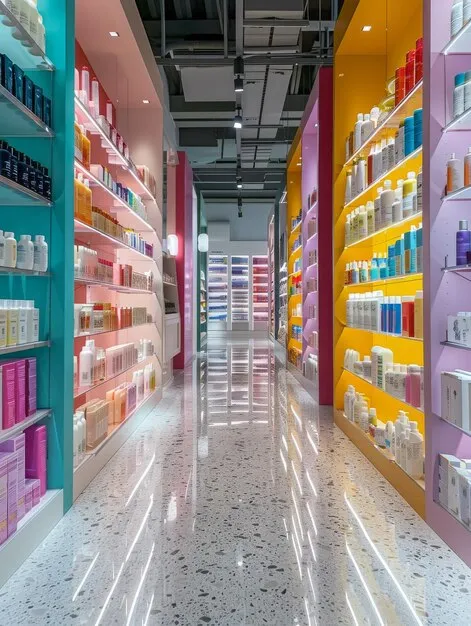
Photo: pharmacy aisle sexual wellness products shelf retail store, via img.freepik.com
Walk into a national drugstore chain and look for female sexual wellness products. You may find a sparse shelf of lubricants tucked beside the family planning aisle — or nothing at all. Now walk into a high-end wellness boutique in Los Angeles or Brooklyn, where a single bottle of aphrodisiac tincture retails for $48, displayed under warm lighting next to adaptogenic chocolates and, yes, scented candles.
Two retail realities. Two very different messages about women's desire. Neither of them, it turns out, is particularly reassuring.
The Two-Tier Marketplace
For decades, mainstream American retail has treated female sexual health as either clinical or embarrassing — something to be sold in discreet packaging, shelved at knee height, or pushed entirely online where no one has to make eye contact with a cashier. Male performance products, by contrast, have enjoyed front-page advertising, Super Bowl commercials, and prominent placement for a generation.
The recent 'sexual wellness' boom appears to change that. Boutique brands with minimalist typography and pastel packaging have reframed lubricants, oils, and arousal aids as self-care. But look closer at what's actually on those curated shelves: overwhelmingly, unregulated supplements and topicals. The products with real FDA oversight — the prescription medications with clinical trial data behind them — remain largely invisible in retail spaces altogether, confined to pharmacies and telehealth platforms.
The result is a strange inversion. The products with the strongest marketing and best shelf placement often have the weakest evidence. The products with actual regulatory scrutiny are the hardest to stumble upon.
A Tale of Two Regulatory Standards
Consider flibanserin (Addyi), the first FDA-approved medication for premenopausal women with hypoactive sexual desire disorder. Its approval followed years of scrutiny, including two rejected applications and repeated safety reviews. The approval process was arguably more rigorous than it needed to be — but rigorous it was. Every claim on the label is backed by controlled trials. Every risk is disclosed in mandatory labeling.
Now pick up nearly any 'libido booster' in the wellness aisle or the endless scroll of an online marketplace. Dietary supplements are not required to prove efficacy before hitting shelves. The FDA generally steps in only after products are on the market — and often only after harm is reported. Independent testing groups like ConsumerLab and Labdoor have repeatedly found sexual enhancement supplements adulterated with undisclosed pharmaceutical ingredients, including sildenafil analogs that can be dangerous for people taking blood pressure medications.
The candle-adjacent tincture and the heavily vetted prescription pill occupy the same conceptual category in the consumer's mind. They should not.
Why Placement Is Policy
Merchandising is not trivial. Product placement shapes what consumers believe is normal, safe, and legitimate. When evidence-based treatment is hidden and hype-driven supplements are celebrated, the marketplace quietly teaches women that their desire is a lifestyle aesthetic rather than a medical concern worthy of serious science.
Advocates have long argued that the same dynamic plays out in insurance coverage, clinical research funding, and physician training. The pharmacy aisle is simply the most visible expression of a systemic pattern: female sexual health is profitable when packaged as wellness, and neglected when it requires actual investment.
A Shopper's Checklist: What's Actually Worth Buying
Before you spend money on anything promising to 'ignite' or 'awaken' your desire, run it through these questions:
1. Is it FDA-approved, FDA-regulated, or neither? Prescription medications carry the strongest evidence requirements. FDA-regulated devices and over-the-counter products (like certain lubricants) meet safety and manufacturing standards. Supplements marketed for desire are, functionally, neither reviewed for efficacy nor reliably tested for purity.
2. Does the claim match the evidence? 'Supports healthy libido' is marketing language, not a clinical outcome. Approved medications must cite trial data; supplements are legally required to carry a disclaimer admitting their claims haven't been evaluated by the FDA. Read it.
3. Is there third-party testing? Look for USP, NSF, or ConsumerLab verification at minimum — and even then, remember that 'not contaminated' is a low bar compared to 'works.'
4. Would a clinician recommend it? A OB-GYN, nurse practitioner, or certified sexuality counselor can tell you whether a product addresses an actual diagnosis — or whether the underlying issue is hormonal, medication-related, relational, or circulatory, none of which a gummy can fix.
5. Is the brand selling a solution or an aesthetic? Beautiful packaging isn't a sin. But if the marketing budget clearly exceeds the research budget, that's information.
From the Aisle to the Advocacy
The placement problem is fixable, and there are signs of movement. Some national chains have expanded sexual wellness sections; several states have moved to require insurance coverage for female sexual dysfunction treatments; and a growing cadre of clinicians is pushing for the same retail and cultural normalcy that erectile dysfunction medications received decades ago.
Until then, shop like an advocate. Demand evidence over ambiance. Ask store managers why the evidence-based products are hidden while the candles get the good lighting. Every purchase and every question is a small vote for a marketplace that treats women's desire as a matter of health — not home décor.